

In many churches, children who wrestle with questions about their sexuality learn very early to keep those struggles hidden. They don’t know if it’s safe to be honest about their attractions. So they process their fears and questions alone, often for years, which deepens loneliness, anxiety, shame, and spiritual confusion during the most formative seasons of their lives. And this isn’t theoretical for me, it’s personal.
The man I married, the father of my kids, is gay. Throughout his teen and college years, he hid in the closet. Then he left our family and the faith just before our son was born. This is why I don’t talk about sexuality like it’s theoretical. I know what happens when kids don’t have language to share about their attractions, when they don’t feel safe to be honest, and when the only advice given is, “Just pray harder.”
This Cultural Moment
We live in a complex cultural moment. Conversations about sexuality dominate the news, and entire church denominations have split over sexual ethics. Sexuality isn’t a fringe topic, and it doesn’t seem like one we’ll move away from any time soon. Kids are asking questions earlier, a larger percentage of kids are coming out, parents feel unprepared, and ministry leaders feel the pressure to respond.
Most of the kids in our kids ministries are part of Gen Apha, born between 2010 and 2024. While there is no definitive data for Gen A yet, trends from previous generations are telling.
In 2023, 2.3% of Boomers, 4.5% of Gen X, 9.8% of Millennials, and 23.2% of Gen Z identified as LGBT+. It would not be unthinkable to expect 25% or more of Gen A to identify as LGBT+.
Why are so many adopting an LGBT+ label? Several dynamics are at play:
1) An increasing number of people are recognizing their capacity for sexual fluidity and choosing to label that fluidity as LGB.
2) The bisexual category has expanded. People who are “mostly straight” now identify as bisexual instead of straight.
3) There are more ways to be queer and more space under the queer umbrella. New labels continue to emerge.
4) Some teens explore a trans identity as a way to reject “traditional” cultural roles and norms.
5) The LGBT+ community offers belonging in a way that many other communities don’t.1
And kids are immersed in culture. They attend public or private schools, have access to movies and video games and YouTube, are exposed to social media like Instagram or TikTok, and will overhear their parents talk about the news.
These questions are going to show up in Sunday School, in Awana, at VBS, at kids’ camp, and in children’s church.
And most parents feel unprepared. They were not adequately prepared by their families, churches, or pastors and mentors to respond to the cultural conversation around attractions and sexual orientation. Parents may have only had one “sex talk” from their parents, if that. Maybe their church offered a few high school youth group lessons that focused narrowly on abstinence and heterosexual marriage. Their pastors may have only spoken about same-sex attraction in vague ways. Very few were equipped to engage kids in conversations about God’s wisdom for sexuality. So when kids ask questions, parent don’t know how to respond.
In addition, the rise in LGB identification and change in societal thought around sexuality topics was extremely swift. When we couple that with the fact that the Church has actively avoided the topic for years, not wanting to anger anyone in the pews, we realize that silence has cost us dearly. Parents don’t know how to respond to their kids’ questions, and leaders don’t know how to respond to the parents or to the kids’ questions at church.
Lastly, church leaders feel pressure. Some of you are in churches where leaders pressure you to stay silent. Some of you feel pressure from parents who react with shock or anger if any leader dares to bring up any sexuality topic, even with high school age kids. Others of you may be in places where parents vocally affirm a revisionist ethic, even though that’s not what your church teaches. And some of you are seeing kids suffering in real time and want to respond with care and compassion, but you just aren’t sure the best ways to do that. You know that what kids ministry leaders say (or don’t say) can shape whether a child turns toward the Church or away from it when sexuality questions arise. You know you need to get this right.
You’re feeling pressure, and so are gay kids. Let’s talk about why kids hide in the closet.
The Closet
There is a five-year gap between when kids first begin to realize they experience same-sex attraction and when they tell a pastor or a parent.
That’s five years they’re making sense of their attractions in isolation, listening to cues from their church as well as culture. If the message they get from their church is “Gay is gross, gay is bad,” while not being taught the beautiful, good, and fulfilling things God has to offer gay people, it’s likely their theology will begin to drift, either toward a more revisionist framework or away from God entirely.
By the time they finally open up, they’ve often already formed their beliefs. The opportunity to walk with them through those early questions has passed.
And coming out feels risky. Many fear rejection, disappointment, or even losing their family. For some, those fears are not unfounded. So they stay hidden.
Fear is a powerful motivator to keep kids in the closet.
So what do kids experience when they hide in the closet? Closet wounds.
Closet wounds are the deep, often lifelong injuries that result from hiding one’s attractions during critical developmental years. These wounds shape how a person sees themselves, how they relate to others, and how they understand God.
In the best cases, Christian teens who endure years of closet wounds come out still clinging to faith, but just barely. The pain they endured leaves them spiritually limping, unable to thrive according to God’s wisdom. In the worst cases, those teens grow into adults who have lost their faith in God completely. Tragically, some never grow into adults at all. For them, the closet wounds run so deep and the lies of the Enemy grow so loud they choose death over a life of unbearable pain.
Adolescence is already a high-stress stage of life. Teens face academic demands, the pressure of planning for their future, shifting family dynamics, and changing relationships with friends and peers. On top of that, teens are making sense of their sexual and romantic attractions.
Gay teens, particularly those in conservative religious environments, often feel forced to figure out their relational questions in secret. They feel shame, and shame tells them their attractions must be hidden. This shame then becomes a wall between them and the people who care about them. Gay teens begin to compartmentalize, only sharing selected pieces of themselves with parents and friends, always guarding the secret they believe could ruin everything. Same-sex friendships may be avoided out of fear they’ll be “found out,” while opposite-sex friendships may feel too risky due to the possibility of betrayal.
What’s the result of all the hiding and shame? Isolation.
Gay teens often feel they have no one with whom they can share their full story. No one knows what’s truly going on in their hearts and minds. They have no relationships where they are fully known and fully loved. The emotional loneliness eats away at them. Many spiral into anxiety, depression, or self-loathing. Some develop body shame and eating disorders. Most turn to unhealthy coping mechanisms to numb the pain—binging or purging, gaming, drugs, alcohol, pornography, obsession with academic performance. When the unhealthy coping strategies stop working and the weight of hiding becomes too much, suicidal thoughts may follow.
Tragically, the teens who silently suffer in the closet often come to believe that their brokenness is their fault and that if God even exists, He must hate them. Over time, the silent suffering turns into despair.
What do kids experience when they do come out? Continuing wounds and slow healing.
Coming out doesn’t erase closet wounds; it simply stops the hiding. The loneliness, shame, and anxiety often remain, even as healing happens slowly over time.
Some of the most important work we can do in LGBT+ spaces is ensuring kids now never have to enter the closet in the first place.
This requires kidmin leaders to rethink the goal.
The goal isn’t to ensure that none of the kids in your ministry are gay. And it isn’t to try to change their attractions. Research consistently shows that attempts to change sexual orientation are ineffective and often harmful.
So we reframe the goal. The goal is:
- relational safety – with God, us, and parents
- spiritual formation – knowing the truth about God’s love, His wisdom, and His plans for LGBT+ people
- discipleship – equipping parents and leaders to have early conversations about sexual stewardship
The goal is kids who trust God’s wisdom and who thrive when they follow it, no matter who they’re attracted to.
The Power of Early Discipleship
Early discipleship is key to achieving that goal, which means conversations about sexual stewardship and God’s love and wisdom for gay people must begin before puberty.
Before puberty, kids need to hear:
- Attractions are not chosen or sin
- Questions are not shameful
- You will not be rejected if you experience same-sex attractions; you don’t have to change your attractions to belong here
- God loves gay people and has good for them
- God’s expectations for everyone’s sexual stewardship is the same
Kids need their parents and leaders to have intentional conversations about sexual stewardship with them. If we don’t teach them, the Enemy and our sex-obsessed culture will.
The timeline of sexual development makes this urgency clear. Many kids begin recognizing same-sex attractions as early as nine, but may not tell anyone until their mid-teens or later. That gap is filled with questions, research, and internal wrestling. If we wait until high school to start these conversations, we’ve missed years of opportunity to speak truth and build trust.
If conversations must start early, does that mean you’ll have to encourage parents to talk to their toddlers about gay sex and drag queens? Won’t early conversations destroy innocence? No.
Thankfully, age-appropriate information doesn’t take away innocence. In fact, accurate information will protect kids from confusion, sexual predators, and the lies of the Enemy. Choosing to withhold information actually makes for ignorant kids, and ignorant kids may quickly lose their innocence when they seek out information on their own.
This is where age-appropriate conversations come into play. As children age, add more depth and nuance into the same conversations; you don’t need to dump everything on a child all at once. For example, you wouldn’t talk explicitly about pornography with a three-year-old, but you can begin talking about honoring images of others, listening to their bodies and emotions when something makes them uncomfortable, and internet safety.
While you would not explain gay marriage to a four-year old, you can talk about everyone’s need for family, God’s design and purpose for Christian marriage and Christian vocational singleness, loving others who believe or behave differently than their family, and how everyone experiences brokenness they don’t choose. We have to build a foundation of God’s wisdom for all of life and for all of sexual stewardship in general so that when the tough questions come that require nuance and have more gray areas, kids already have a solid place to start. Foundational wisdom includes God’s design for marriage and singleness, where kids can find connection in community, what bodies are for and why God created males and females, God’s love for everyone, how the world and everyone in it experiences brokenness, etc.
Preventing closet wounds will help gay teens avoid the most heartbreaking outcomes, yes. But our goal is much bigger that just prevention. Ensuring kids and teens are protected from the isolation of the closet opens the door for them to receive the love and guidance of their parents, pastors, and friends. Shame is ousted and space is made for intimate connection with God and community. When that happens, gay teens are set up to thrive for a lifetime according to God’s good wisdom.
Preemptively talk about the questions at the intersection of faith and sexuality and provide answers. Build trust and openness with the way you treat LGBT+ topics and people. And then be patient as teens make sense of these questions when they do share. When kids who will one day experience same-sex attraction know that God loves gay people and are assured of their safety in their home and church well before they ever begin to experience attraction, they will be spared some of the stress of coming out and can begin developing deep friendships, connecting with others who are LGB, and pursuing a close relationship with God rather than hiding in shame or fear. When you take the time to talk about same-sex attraction, you are also reminding kids that you are a safe person to come out to, that you will protect them and help them thrive in God’s good plans for their lives.
So what does all this mean for your kids ministry?
Creating Ministries Where Kids Feel Safe to Share
Your role is not to replace parents. Your role is a partner in discipleship. Whenever you can, position parents as the first and safest voice and come alongside what they’re already teaching their kids. Normalize parent-led discipleship.
Concentrate on your ministry culture. What kind of language are you using to talk about LGB people, about sex? Have you considered the implications of policing so-called “identity language”? What kind of tone do you set when topics of sexuality come up? Are you creating an environment where kids feel safe to ask questions and share honestly?
Avoid jokes or dismissive comments. They communicate quickly that your space isn’t safe. Avoid vague or loaded phrases that confuse more than they clarify. Speak with clarity, humility, and compassion.
Be thoughtful about language. No term is perfect, and language is always changing. What matters most is using words that help build relationships and communicate truth clearly. For many kids, terms like “gay” are descriptive, not ideological. Meeting them where they are linguistically can help remove unnecessary barriers to the gospel.
I am committed to saving gay kids from the wounds of the closet, from loss of faith, and from the kind of hopelessness that leads to suicide. Gay kids already bear extremely heavy burdens, especially in our churches, and we must commit to a strategy of ministry that most effectively gives gay kids the knowledge of God’s love. Part of that strategy includes using words that are already familiar to them, erasing the false dichotomy that they can either recognize their same-sex attractions or gender incongruence or be a Christian, and contextualize the gospel for them instead of allowing language and church culture be a barrier to Christ’s love.
One practical way you can do that: take the power away from the cultural scripts. Decouple the language from the behavior. A child’s attractions don’t change how God expects her to steward her attractions and relationships. Use the language she uses, but talk about God’s expectations for every Christian, regardless of their attractions. God’s wisdom is good, and His script is best no matter what words a child uses to describe herself, her experiences, or her attractions. Rather than convincing a kid that she’s not gay or that using gay (or queer or any other word) is a bad idea; spend your time convincing her that God’s wisdom is worth following.
At the same time, emphasize belonging. Kids need to know they belong with God and with His people before they can fully understand or believe everything we teach. Belonging creates the space where belief can grow and transformation can take place.
Know what to say when a child shares about same-sex attractions. At some point you may have a child come directly to you and share about his same-sex attractions. Your response in the moment matters a lot. Obviously you want to avoid shock or disgust. Avoid asking whether the child is still a Christian. Save the deep theological questions for later. Offer reassurance, care, and comfort.
You could say something like, “Thank you for telling me. You are so brave. You are not in trouble. I care about you. God loves you. God is not surprised. God has good to offer you. Let’s talk with your parents together.”
And the follow through. Help the parents disciple the child, and continue loving the child well and pointing him to God’s goodness and wisdom.
What LGB/SSA Kids Need From Their Churches
Churches where kids who experience same-sex attraction actually thrive can pass what Equip calls “The Gay Teen Test” below. If you want to, keep a mental score of your own church. Rate each statement 1-5, with 5 being “My church is doing this perfectly. We’re knocking it out of the park here.” and 1 being “We haven’t thought about this at all. Or we’re afraid to address it, so we ignore it.”
1) LGB kids and teens need their churches to become places where everyone is thinking theologically about sexual stewardship.
When this is the case, LGB Christian teens find fellow cross-bearers in their straight brothers and sisters. These churches teach that God has the same standard of sexual stewardship for all people, that all Christians have the same inherent capacity for Christian marriage to someone of the opposite sex or singleness for the sake of His kingdom, and that all Christians should offer to God the question of their relational vocation. LGB Christians can be called into a Christian marriage, and straight Christians can be called into lifetime singleness.
2) LGB kids and teens need their churches to talk publicly about the challenges LGB people face so they know it’s safe to share their story.
Churches that avoid speaking up about God’s love for gay people leave LGB teens wondering whether it’s safe to share their stories. With compassion and theological accuracy, churches must be willing to explore questions like: How does same-sex attraction develop? Will it change? How can gay people get their intimacy needs met? How is God’s invitation to gay people good? How do queer people fit into God’s story? When these questions are thoughtfully and publicly (i.e. within a whole-church context; Sunday morning sermons or a weekday discipleship class, for example) explored, everyone who attends your church knows how to love LGB people well and how to reflect Christ’s love in conversations about human sexuality. LGB people know it’s safe to share their story.
3) LGB kids and teens need their churches to make sure every child knows God loves gay people and has good plans for them.
Most churches wait until a teen shares that he or she is gay before addressing the topic of homosexuality. This usually leads to the five-year gap we discussed earlier and leads to many gay teens and young adults developing depression, shame, and suicidal ideations and/or adopting a revisionist sexual ethic.
Instead, churches should talk about same-sex attraction in age-appropriate ways with all kids throughout their time in the kids’ ministry. Before a child realizes he or she is attracted to people of the same sex, he or she should know that God loves gay people, that gay people don’t choose who they are attracted to, that their church won’t try to fix gay people, and that God has good and beautiful plans for gay Christians.
When teens do realize they’re gay, they know they can quickly share with pastors and parents who are able to help them learn how to follow God’s wisdom for sexual stewardship.
4) LGB kids and teens need their pastors and lay leaders to know how to minister to them well.
Many times a parent’s first reaction when a child comes out is to send them to a therapist or a parachurch ministry because pastors and lay leaders don’t know how to minister to LGB people well. The shame and loneliness gay teens feel is amplified because their challenges are treated as weird problems that need special help. They are told to make sense of a key aspect of their personhood away from their church family, the ones they worship with and take communion with.
LGB teens need their pastors and lay leaders to do what it takes to gain the competency needed to provide pastoral care to gay people.
Parents and pastors recognize that being gay is not a mental illness to be cured and help gay teens integrate their faith and attractions in ways that lead to thriving while cultivating deep friendships and following God’s wisdom.
5) LGB kids and teens need their churches to be places where gay people can thrive in either Christian marriage (mixed-orientation marriage) or lifetime singleness for the sake of the gospel.
A lot of churches have the right beliefs about sexual ethics, but the pathways for sexual stewardship they offer aren’t viable. For gay teens to thrive, they must see adults modeling thriving in vocational singleness and mixed-orientation marriages, hear teaching about the theology of celibacy in Scripture, and be invited, along with straight teens, to discern whether God is calling them into Christian marriage or vocational singleness. Most importantly, these churches are places where celibate people can find the same depth of family that married people find, whether that’s through intentional Christian communities of vocationally single people, helping celibates move in with marrieds to be a part of their family, or fostering strong, permanent connections between members of the Church.
How is your church doing with these things? What improvements could be made? How could you be a part of making those changes?
If you were a little dismayed by the results of the Gay Teen Test, you’re not alone. I’ve never met a church that scored perfect 5s across the board.
Equip can help your church take the next step in eliminating the closet. If your church desires to think more intentionally about proactive discipleship around identity, sexuality, and belonging, I’d love to come serve your leaders or parents.
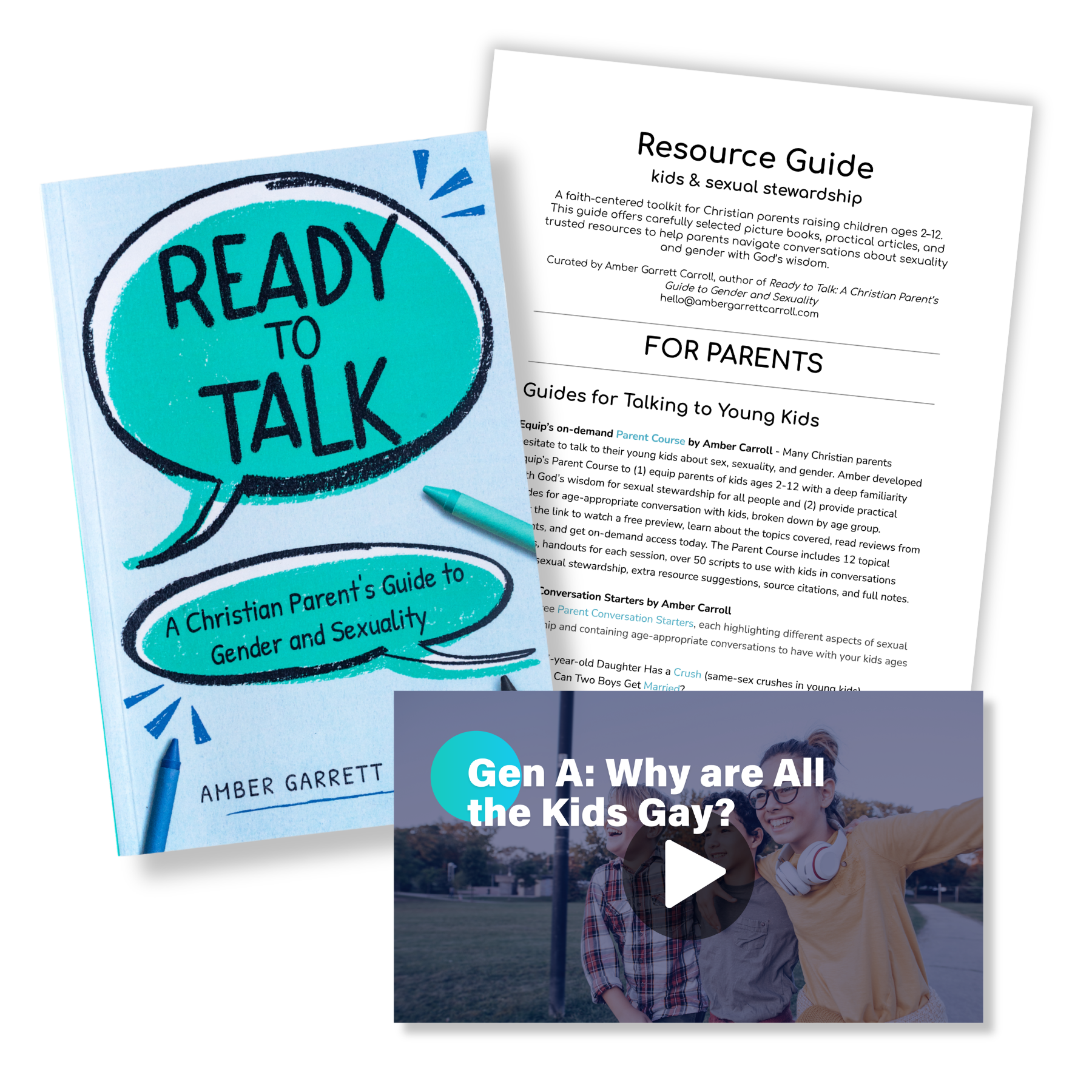
To access the full webinar recording, including a handout, visit equipyourcommunity.org/premium.
- Equip’s webinar “Gen A: Why Are All the Kids Gay?” is available at equipyourcommunity.org/premium. ↩︎