

I want to begin slowly and clearly, because this subject isn’t abstract or theoretical. It’s not merely cultural commentary. It’s about real people, real faith, and real harm.
The ex-gay movement did not disappear. It evolved.
Many Christians believe the ex-gay movement died in the early 2010s. In 2013, Exodus International shut down. Its leaders publicly acknowledged that sexual orientation change efforts did not work and often caused profound psychological and spiritual harm. For a brief moment, it seemed like the Church had learned something important, even if painfully.
By the end of that decade, a fragile consensus had emerged in many Christian spaces. People do not choose who they’re attracted to. “Pray-the-gay-away” approaches were ineffective and dangerous.
The Church needed a better way to disciple same-sex attracted Christians faithfully.
And yet, over the last several years, many of the same ideas have quietly returned. They no longer look like the caricatures of the past. They rarely use the same language. They often sound more careful, more clinical, more theologically sophisticated.
But the goals are familiar. The pressures are familiar.
And the outcomes, if we’re not careful, will be familiar too.
This webinar is about recognizing those patterns early.
I want to expose three modern expressions of what we’re going to call the “new ex-gay movement.” I want to explain how they function, why they’re persuasive right now, and why they continue to offer false hope that ultimately damages faith, fractures families, and costs lives.
Those three expressions are:
- Reintegrative Therapy
- The Concupiscence Debate
- Trans Whataboutism
But before we talk about any of them, I want to share why this is also personal
From ages 15 to 25, I met with three therapists who promised to increase my heterosexuality.
I attended multiple psychotherapeutic ex-gay retreats, interned with a pray-the-gay-away ministry for nine months, and prayed nightly for God to make me straight. Each week, my therapist recorded my levels of opposite-sex attractions (OSAs) and same-sex attractions (SSAs) to graph my progress (and failure). I attended a psychotherapeutic weekend where leaders re-enacted my worst homophobic experiences “to bring healing.” Weekend facilitators led us in supervised “golden father holding” sessions (complete with handouts of approved cuddling positions) and pressured me into letting older men hold me.
An ex-gay pastor blamed my homosexuality on a lack of parental touch after being in a full-body cast for four months as a toddler. He instructed me to do infantile activities to repair my childhood wound, all while he watched. During a charismatic healing session, I was asked what the Holy Spirit was saying to me. When I shared honestly that I wasn’t hearing anything, I was chastised in front of the entire group, “You must have some kind of unrepentant sin that’s blocking the Spirit. No doubt that’s keeping you from sexual wholeness.”
Like roughly 96% of people who’ve participated in sexual orientation change efforts (SOCEs), I experienced no change in my sexual orientation. And like most ex-gay survivors, my anxiety and depression deepened, and my dependence on unhealthy coping mechanisms landed me in sex addiction recovery.
At the same time, I dated multiple women in college while being transparent about my sexuality, enjoyed romantic intimacy with them, and aspired to get married.
While I’m not bisexual and was fairly out in college, I was in a Christian fraternity and had to take women to date events. A handful of times, both my date and I were surprised by how much we enjoyed the date and decided to go on more. On two separate occasions, I fell in love while we dated, and at one point we nearly got engaged (but later broke up for reasons unrelated to my sexuality).
By the end of college, I knew that if God wanted me to marry a woman, it could work. But I also studied what the Scriptures had to say about lifetime abstinent singleness for the sake of kingdom work. Both seemed like possibilities for me. Eventually, the Holy Spirit made clear to me that I wasn’t supposed to pursue whichever vocation I wanted, but instead I was supposed to ask God whether He had a preference for which gift He wanted to give me. So in 2014, I started discerning my calling.
Though I went into the process preferring marriage and hoping God would call me to it, by 2017, I felt strongly that God was calling me to vocational singleness in the context of a committed community. I then started focusing on building what would become the Nashville Family of Brothers (the intentional Christian community where I find family today).
That being said, I still acknowledged that it was possible for me as a primarily same-sex attracted man to develop genuine romantic feelings for a woman—with transparency. Since then, I’ve had many friends and counseling clients in healthy mixed-orientation marriages.
And I should noted that “mixed-orientation marriages” (MOMs) is a term many use to describe an opposite-sex marriage in which at least one individual experiences same-sex attraction. As a Licensed Professional Counselor, I’ve served many individuals in MOMs. I’m convinced that those marriages, when begun and continually lived out with honesty, can be just as healthy as (if not healthier than) the average straight marriage.
I share all of this because it shapes how I respond when I see ex-gay ideas returning under new names. This isn’t about winning arguments. It’s about protecting people who are still vulnerable, still hoping, still trusting the Church to tell them the truth.
What is Regenerative Therapy?
In 2018, Joe Nicolosi Jr., the son of Joseph Nicolosi Sr.—one of the most influential architects of modern conversion therapy—founded the Reintegrative Therapy Association. The stated purpose was to promote what Nicolosi Jr. described as a new therapeutic intervention for gay people who hoped to become straight-ish enough to marry someone of the opposite sex.
Nicolosi’s therapy has grown to fill the space his father’s imploded brand left in many conservative churches and communities, with hopes that more same-sex attracted individuals would successfully marry people of the opposite sex. According to its website, the Reintegrative Therapy Association (RTA) does not provide conversion therapy, but rather “interventions designed to resolve traumas and develop greater attachment security.” Yet, a nifty graphic on their about page admits that “changes in sexuality are a byproduct, rather than a goal of the therapy,” setting up an explicit expectation of change.
While RTA pays lip service to orientation changes not being the goal of reintegrative therapy (RT), in practice, RT is primarily for same-sex attracted people who want to marry someone of the opposite sex. They meet with an RTA-licensed therapist hoping to decrease SSAs enough and increase OSAs enough to make a MOM work.
Enjoying the acronyms?
Practitioners of this new “therapy” claim that it’s meaningfully different from the SOCEs of the 90s and 00s. In reality, it’s the same haunted house with a fresh coat of paint. The only difference? The RTA website graphic brags that, unlike conversion therapy, reintegrative therapy is trademarked, licensed, and ethics-bound exclusively by this new RT organization. It’s conversion therapy, but with better franchising.
Ohh, and guess who the founder, owner, and profiteer is? None of that the son of the father of conversion therapy, Joe Nicolosi Jr.
Rich.
Joe might quip back, “But when we’ve helped people with their emotional wounds, they’ve found it easier to enjoy relationships with people of the opposite sex!” Well yes, Joe, tending to trauma scars makes a person more emotionally available, regardless of sexual orientation, to step into friendships or relationships of any kind. That’s not sexual orientation change.
Or Joe might snark at me, “What about the SSA Christians who we’ve helped disentangle their sexist attitudes toward people of the opposite sex, leading to less barriers to a MOM?” Yes Joe, some SSA Christians had negative experiences with their opposite-sex parent or another opposite-sex figure in their life, leading to sexist attitudes. But reducing a general yuck toward the opposite sex isn’t sexual orientation change, it’s just maturity.
In a last ditch effort, Joe might still chirp, “We’ve helped people lower their unrealistic expectations for marriage. We teach that honesty, emotional intimacy, and commitment are all you need for a good marriage. And it’s worked for some MOMs!” Again Joe, yes, but no. It’s true that secular sex therapists teach that the key to a lasting marriage and satisfying marital intimacy has nothing to do with finding your spouse “smoking hot”, in the words of way to many youth pastors. Instead, the keys are honesty, emotional intimacy, and commitment. But that’s true of all marriages and isn’t sexual orientation change.
In part, RT offers common pre-marital counseling processes, leading to general positive mental health outcomes that have nothing to do with sexual orientation, yet calling it sexual orientation change. But there are some ways RT is different from other forms of therapy—and it’s why I’d never practice RT or recommend it to a client or friend.
Similar to OG conversion therapy, practitioners of RT are still preying on their clients desire to “not be gay” and pass as straight, leading to OG results: continued hiding and shame, lack of authenticity, loneliness, depression, and unhealthy coping mechanisms. Just like OG conversion therapy, if the client isn’t ultimately successful at a lifelong healthy MOM, the client is blamed instead of the fraudulent therapy.
To their credit, RT advocates are onto something when highlighting research about sexual fluidity, as well as in their effort to normalize people (honestly) seeking companionship with people they might not be most highly attracted to. For evidence that sexual orientation can change, RT advocates often point to the research of Dr. Lisa M. Diamond, a lesbian feminist psychologist based at the University of Utah who is the poster child for sexual fluidity research.
Yet her studies (this one, this one, and this one) demonstrate that while it continues to be uncommon for OSAs or SSAs to diminish over a person’s lifetime, it is common for SSAs to increase over a lifetime, particularly among females.
These findings are not new, of course. Researchers have known (and if you ask any woman, she’ll likely tell you) that female attractions are driven by more of a mix of the emotional and the physical. As a result, females who don’t experience unavoidably robust SSAs can develop (intentionally or unintentionally) romantic desires for someone of the same-sex that are enough to step into a same-sex romantic (and eventually sexual) relationship.
Males, however, are different. Male sexual desire is driven primarily by physical attraction, so as a result, it’s more difficult for a straight male without unavoidably robust SSAs to develop romantic desires for another male. In addition, homophobia is greater among males, often driven by cultural obsessions with masculinity and the association of low masculinity with homosexuality. This increased homophobia, on average, leads to even greater aversion to same-sex romantic love if a male isn’t gay (and even if he is).
But that’s changing for Gen Z…
Gen Z and Gen Alpha are generally disillusioned with romance idolatry, regardless of sexual orientation. They’ve seen the impact of “happily ever after” on their parents. Their parents were promised “the one”, but when “the one” didn’t materialize (or ended in heartbreak), the idol of romance convinced older generations that if they were only more attractive, more wealthy, more cultured, or spent more money on enough magical dates, they too could achieve happily ever after. Too many people have been tricked into chasing something disappointing under the guise of “a gift from God.”
In that cultural context, some queer Christians may pursue mixed-orientation marriages—not to escape queerness or perform heterosexuality, but because they feel genuinely called to Christian marriage and understand it soberly.
That does not require Reintegrative Therapy.
It requires honesty. Discernment. Community support.
Reintegrative Therapy becomes dangerous precisely because it mislabels maturity as orientation change and sells false hope to people who are already vulnerable.
And that sets the stage for the second expression of the new ex-gay movement, which operates not primarily through therapy, but through theology.
Concupiscence Debate
In a few words, the Greek word epithumia is used in the New Testament in various ways, but one subset (translated as concupiscence) describes actively choosing to lust after something in response to temptation. However, a fringe Calvinist understanding of concupiscence ignores biblical context and argues that a person sins even when they successfully resist temptation because the temptation itself is a sin (if the person is tempted internally). Apologists then narrowly apply their fringe understanding to SSAs. They argue merely experiencing SSAs is a sin in itself, even if the person resists every temptation. The apologists further argue (because they believe merely being tempted is a sin), that SSA Christians can only be faithful if they daily pray for orientation change, give reintegrative therapy a try, and refrain from calling themselves gay.
These Calvinist concupiscence advocates go on to doubt the salvation of any SSA Christians who identify as “gay.” So that’s the short of it. Now let’s slow down and explore each of those more carefully.
Augustine and Aquinas argue that healthy desires/passions are God-given impulses toward good things God created. Healthy sexual attraction is a God-given desire to unite with an opposite-sex spouse in a self-giving way that is open to children. Healthy physical attraction is a God-given capacity to recognize physical beauty. Healthy relational attraction is a God-given desire for platonic friendship with another person.
Nothing exists that God has not created, and everything that God creates is good; therefore, evil has no positive existence in itself, but must always be a privation or perversion of something good. We sin when we choose a lesser good over a greater good or misuse some created good in a self-serving way.
TEMPTATION IS NOT SIN
Temptation, then, is an invitation to choose a lesser good over a greater good or misuse a created good in a selfish way. Sexual attractions become temptation when they are directed toward an improper object (a person with whom one cannot enter into a legitimate sexual union). Physical attractions can become temptation when the beauty of another is selfishly misused as an object of lust. Relational attractions can become temptation when a desire for friendship is sexualized.
Why is this important? If temptation and sin are always misuses or corruptions of something good God created, then our response cannot be just to say no. We must identify the good, God-given desire that is being corrupted and meet that good desire in healthy ways.
ORIGINAL SIN AND MORAL RESPONSIBILITY
Original sin refers to the fallen state of all humanity. Because of Adam’s sin, we have lost our original righteousness and, apart from God’s grace, our choices tend toward sin. On an individual level, original sin is a corruption and imperfection starting at our formation in the womb on a physical and spiritual level, inclining us to volitionally commit sins.
Free will has been weakened by original sin, but not destroyed. We do not have the capacity to choose or live perfectly, but a desire for good and a capacity to make good decisions remains inherent to the bent-but-not-destroyed image of God in each of us. When a person willfully sins, the person has fallen short of God’s standard of perfection and deserves punishment, referred to as guilt. A healthy response to this guilt is a feeling of inner turmoil, often referred to as “feeling guilty.”
However, a person is not guilty and does not need to feel guilty for being tempted. We are not committing actual sin when we are tempted. We are not responsible for our involuntary thoughts. While we need to recognize daily that we are fallen and need a savior, we do not need to confess or repent of specific temptations.
When we say “yes” to a temptation in thought, word, or deed, we have sinned. When we participate in the temptation, when we step toward the temptation in any way, we have crossed the line from temptation to sin. We have done something for which it would be healthy to feel inner turmoil. We have done something that we need to confess and repent of.
Why is this important? The Enemy often cultivates unhealthy shame in the Christian by falsely accusing him of already having sinned after merely experiencing temptation. This shame can then make it easier for the Christian to commit actual sin. Clearly distinguishing temptation from sin allows the Christian to accept culpability for actual sin while rejecting the Enemy’s messages of shame when a Christian has merely experienced (but resisted) temptation.
WHAT IS CONCUPISCENCE?
“Sinful” can be used to modify an action to describe an evil deed. When a person performs a sinful action, the individual is guilty of sin. “Sinful” can also be used to modify a temptation or desire connected to a sinful action. When a person experiences a sinful desire or temptation but resists, the individual has not sinned. But when the person capitulates to a sinful desire or temptation, the individual has sinned.
Christians often use “sinful” in ways that are unclear to the hearer. Is the Christian saying something is related to something broken or sin in itself? To avoid this confusion, EQUIP refrains from using the word “sinful.”
Specifically, when we say yes to a sexual temptation in thought, this is frequently called lust. Lust is a sin. For some, if they have been in the habit of indulging sexual temptations by lusting, moving from temptation to lust may become seemingly automatic such that it is difficult to distinguish between the sexual temptation and the sin of lust.
The Greek word epithumia, most directly translated as “concupiscence,” is used in the Bible generally to refer to healthy desire and more narrowly to refer to lustful desire. In contexts when epithumia describes something illicit, it is consistently contained in a list of actions or contextualized in a way that assumes the individual is actively participating in a temptation (for example, Galatians 5:16-24 and James 1:14-15). Such lustful concupiscence is sin.
That being said, the Church has sometimes used the word “sin” in an analogical sense to describe disordered inclinations inherited through the Fall. However, Augustine, Aquinas, and the Reformers were clear that such inclinations are not personal or culpable sin. There is no moral fault without free consent. Concupiscence remains in the baptized until death, and Christians are not expected to eliminate every internal inclination in this life. To speak imprecisely about temptation as “sin” without qualification risks confusing believers and cultivating unnecessary shame.
APPLYING THIS TO SAME-SEX ATTRACTION
Same-sex attractions often involve the sexualization of healthy desires for same-sex friendship, intimacy, or belonging. In some cases, these attractions reflect an internal distortion of desire shaped by original sin. In other cases, they arise from external sources—such as memory, environment, relational context, or spiritual attack—and do not reflect a settled disorder of the appetites. Distinguishing between these sources is pastorally essential. Regardless, they are a temptation to selfishly objectify the beauty of someone of the same sex, engage in same-sex sexual activity, or lust after someone of the same sex.
Clearly identifying the healthy desires that same-sex attraction are a distortion of can provide clarity for the most effective ways to respond to these temptations, because satisfying the true need can temporarily reduce the broken desire. Same-sex attractions are not a perversion of healthy sexual desire to unite with an opposite-sex spouse in a self-giving way that is open to children. Nor are same-sex attractions a sexualization of a pre-fall desire for same-sex romance unique to gay people. Instead, same-sex attractions are healthy desires for same-sex friendship that have been sexualized. In light of this distinction, what healthy desires should the gay Christian seek to fulfill to most faithfully resist same-sex attractions? Ardently pursuing opposite-sex marriage or seeking same-sex romantic companionship are unlikely to provide escape from the temptations of same-sex attraction. Instead, pursuing healthy same-sex friendship will satisfy the healthy desires distorted by same-sex attraction and will most effectively aid the gay Christian in resisting temptation.
Those who experience the temptation of same-sex attractions are not responsible for this brokenness nor do they need to feel inner turmoil or guilt. They are not sinning merely by being tempted with same-sex attraction. They do not need to confess or repent of same-sex attractions. God does not condemn a person to Hell merely for experiencing same-sex attraction.
But when a person says yes to same-sex attractions in thought, word, or deed, they have sinned. When an individual engages in same-sex sexual activity or lusts after a person of the same-sex, they ought to feel inner turmoil and understand that they have done something that they need to confess and repent of.
As same-sex attraction relates to the word “sinful,” if a person engages in same-sex sexual activity or commits same-sex lust, the individual has sinned. These actions are sinful. Additionally, the temptation of same-sex attraction is sinful, in the sense that it is related to a sinful action. But if a person experiences sinful same-sex attractions and yet resists these temptations, the individual is not guilty of sin.
The words desire, lust, temptation, and attraction are often used inexactly as they relate to same-sex attractions. Some use the word desire interchangeably with lust. Others use desire to mean both temptation and lust. Because of this confusion, we tend to avoid the word desire and more clearly speak same-sex attractions as temptation and lust as sin.
WHERE THE CONCUPISCENCE DEBATE GOES WRONG
As same-sex attraction relates to concupiscence, the temptation of same-sex attraction is not concupiscence because it is not yet lust. But when those tempted with same-sex attraction willfully choose to lust after someone of the same sex, that lust is concupiscence. For a majority of Christians who believe free will has been weakened but not destroyed, who believe original sin and concupiscence are related but not identical, this distinction is important.
Yet, the new ex-gay movement introduces a subtle but devastating shift. They argue that a fringe Calvinist belief that all same-sex attractions are concupiscence, that Christians are culpable and personally responsible for concupiscence as sin, they they should feel full guilt and blame and moral fault even if they resist, and that they must do whatever is necessary to eliminate all concupiscence.
Then they argue that in order to faithfully mortify sin, gay Christians must daily seek sexual orientation change and cannot use the word “gay,” because using the word suggests a recognition that attractions will likely endure (a capitulation to temptations that are sins in themselves, in their eyes).
In other words:
Persistent attraction indicates spiritual failure. Christians must seek orientation change. And acknowledging enduring attraction—by using words like “gay”—signals surrender to sin.
This logic sounds rigorous. It sounds serious. It sounds faithful. But it is not historic Christianity.
It confuses inclination with consent. It collapses temptation into sin. It redefines sanctification as eradication. And it places burdens on people that Scripture does not place.
When attraction itself is treated as sin, temptation becomes indistinguishable from failure, confession turns compulsive, shame becomes chronic, honesty feels unsafe, and faith itself becomes unsustainable for many who cannot survive a theology that condemns them for existing. Shame does not produce holiness but secrecy, whereas clearly distinguishing temptation from sin reduces false guilt, restores honest responsibility, and actually fosters growth, resilience, and obedience.
However, the Church fathers and Reformers have taught that concupiscence is not personal or culpable sin. There is no guilt, no blame, and no moral fault unless someone freely consents. The Christian tradition is explicit that we are not morally responsible for the temptations or inclinations we resist, and we are not expected to eliminate every internal inclination in this life. Augustine, Aquinas, and the Reformers all agree that concupiscence remains in the baptized until death.
If, then, experiencing same-sex attraction is not itself a culpable sin, then gay Christians are not obligated to seek sexual orientation change, suppress honest language, or live under perpetual suspicion. Faithfulness does not require the elimination of temptation, but the wise and grace-filled stewardship of desire in community. Any theological framework that implies otherwise departs from historic Christian teaching and risks repeating the pastoral failures of the past.
If the Church embraces a theology that treats temptation as sin, several things will follow inevitably. Gay Christians will leave or go silent. Orientation-change efforts will regain moral legitimacy. Shame will replace discipleship. And the Church will repeat the same harms under new language.
We do not honor God by repeating our mistakes with better vocabulary. The Christian tradition offers us better tools than this. But we must be willing to use them.
And that brings us to the final section of this webinar, where we examine how fear around trans issues is being used to avoid reckoning with these failures—and how the Church can choose a different path.
Trans Whataboutism
This is the reflexive move that shifts attention away from the documented failures of ex-gay theology and therapy by invoking trans-related anxieties. Whenever the Church is confronted with evidence of harm done to gay Christians, the conversation is redirected.
“But what about trans athletes?”
“But what about rapid-onset gender dysphoria?”
“But what about bathrooms?”
“But what about kids being taken from parents?”
The pattern is familiar. It is emotionally charged. And it is deeply effective. To understand why, we need to talk honestly about fear, power, and memory. To be clear, we’re not going to fully explore what Christ’s love and wisdom is for trans people and how pastors and parents should minister to those making sense of gender incongruence. For the sake of time, we’re just going to focus on exposing how trans whataboutism is used to hide the re-emergence of the ex-gay movement, and a few best practices in response.
HOW TRANSGENDER FEAR FUNCTIONS IN THE CHURCH
Fear has always been a powerful motivator in religious communities. It can mobilize quickly, unify opposition, and override nuance. When fear is framed as moral urgency, it becomes especially potent.
For many Christians, trans issues represent a perfect storm of anxieties:
- fear of bodily confusion
- fear of cultural change
- fear of losing parental authority
- fear of social instability
- fear of moral chaos
These fears are not imaginary. They arise from real cultural shifts, contested medical practices, and rapidly changing social norms. But fear becomes spiritually dangerous when it is weaponized to avoid accountability.
That is what trans whataboutism does.
When confronted with the harm of pray-the-gay-away theology, rather than asking, “What did we get wrong?” the response becomes, “Look over there.” The focus shifts from repentance to resistance. From listening to defending. From people to policies. This allows the Church to feel righteous without being reflective.
THE DANGERS OF BLANKET DEHUMANIZATION
One of the most alarming features of current trans discourse in Christian spaces is how quickly it slips into dehumanization. Trans people are routinely described as predators, groomers, mentally ill, or socially contagious. Rare and horrific cases are generalized. Statistics are cherry-picked. Worst-case scenarios are presented as norms.
This is not discernment. It is fear amplification. And it has consequences.
Trans-identified individuals already experience extraordinarily high rates of anxiety, depression, and suicidality. When Christian rhetoric frames them as threats rather than neighbors, it intensifies isolation and despair. Even for Christians who hold traditional views of sex and gender, this posture is indefensible. The Church cannot credibly oppose medical overreach while simultaneously engaging in rhetorical cruelty.
PASTORAL REALITY: WHAT TRANS-IDENTIFIED PEOPLE ACTUALLY NEED
Most trans-identified people are not thinking about sports leagues or legislative battles. They are thinking about whether their family will still love them, whether their church is safe, and whether God is disgusted by them.
Pastoral care must begin there. That means prioritizing:
- mental health support
- suicide prevention
- stable relationships
- honest conversation
- long-term accompaniment
It means resisting the pressure to have immediate answers to complex questions. It means acknowledging uncertainty where it exists. It means being present before being prescriptive. This does not mean affirming every path someone might choose. It means refusing to reduce a person to an issue.
THE FALSE CHOICE: “TRANSITION OR SUICIDE”
One of the most tragic dynamics in trans discourse is the false dichotomy often presented to families and churches: transition or suicide. This framing is profoundly harmful. While suicidality among trans-identified individuals is real and must be taken seriously, presenting medical transition as the only compassionate response ignores the complexity of the data and forecloses other forms of care.
Christian pastoral care must reject both extremes:
- “Just be normal”
- “Transition or die”
Neither honors the dignity of the person.
Instead, Christian wisdom calls for a slower, more patient approach: one that addresses co-morbid mental health issues, reduces distress where possible through non-invasive means, challenges rigid gender stereotypes, and allows for ongoing discernment. Hope, in Christianity, is not located in self-reinvention but in resurrection.
WHY TRANSGENDER FEAR REVIVES EX-GAY LOGIC
Here’s the connection that often goes unspoken. When Christians become fixated on eliminating queerness from society, trans panic becomes a substitute battleground. It allows the same impulse that once fueled the ex-gay movement to remain active. The desire is not merely to guide people toward holiness, but to make queerness disappear. When that desire takes hold, any framework that promises reduction, normalization, or erasure becomes attractive again.
This is how ex-gay theology survives cultural exposure. It migrates.
Preventing the Return of the Ex-Gay Movement
1. TELL THE TRUTH ABOUT THE PAST
The Church must tell the truth about the failures of the ex-gay movement. Not defensively. Not selectively. Honestly.
This includes acknowledging:
- that orientation change efforts were widely ineffective
- that they produced documented psychological and spiritual harm
- that the Church often ignored or minimized survivor testimony
Truth-telling is not betrayal. It is repentance. Without it, the same ideas will continue to resurface under new names.
2. STOP SELLING FALSE HOPE
Hope is not the same thing as optimism. The Church must stop implying—explicitly or implicitly—that faithfulness will result in heterosexuality or marriage. Scripture does not promise that outcome. When marriage is presented as the expected destination for every faithful Christian, singleness becomes failure by default. That desperation fuels orientation change pressure. Honest hope is grounded in God’s presence, not guaranteed outcomes.
3. BUILD VIABLE PATHWAYS FOR VOCATIONAL SINGLENESS
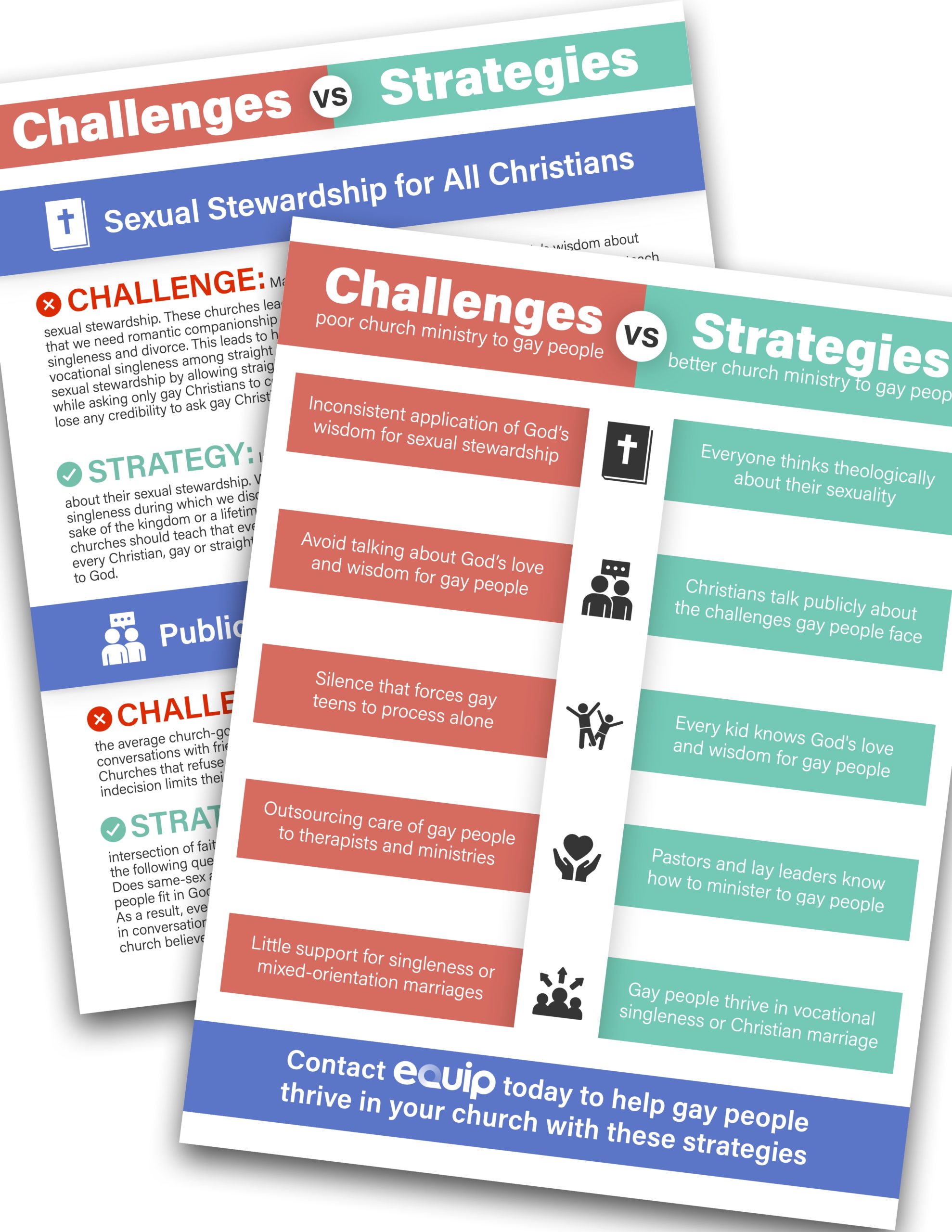
One of the greatest contributors to the resurgence of ex-gay theology is the Church’s failure to support lifelong singleness. If marriage is the only context for intimacy, belonging, and stability, then people will grasp at anything that promises access to it. The Church must recover a vision of spiritual family that does not hinge on romance. Communities like intentional households, shared life commitments, and deep intergenerational bonds should be normal, not exceptional. Singleness must be more than tolerated. It must be honored and supported.
4. CENTER PASTORAL CARE OVER IDEOLOGICAL SIGNALING
In polarized environments, churches often feel pressure to signal where they stand. But clarity without care becomes cruelty. Pastors must be willing to say, “I don’t have all the answers, but I’m committed to walking with you.” Safe spaces for honest wrestling are not threats to orthodoxy. They are its proving ground.
FINAL WORD: A DIFFERENT WITNESS
The ex-gay movement did not disappear. But it does not have to return. The Church can choose a different witness. A witness marked by truth without cruelty. Conviction without fear. Holiness without shame. Hope without false promises. Faithfulness does not require orientation change. Obedience does not require erasure. And the gospel does not need fear to defend it. The question before us is not whether culture is changing. It is whether the Church has learned.