

Our kids don’t live in a vacuum or under a rock. What’s going on around them affects them. And looking at the trends over the past quarter century, it’s no surprise that more of our kids are embracing LGBT+ labels and rejecting traditional, conservative culture’s rigid boxes around sexual attractions and gender expression.
So let’s talk about it.
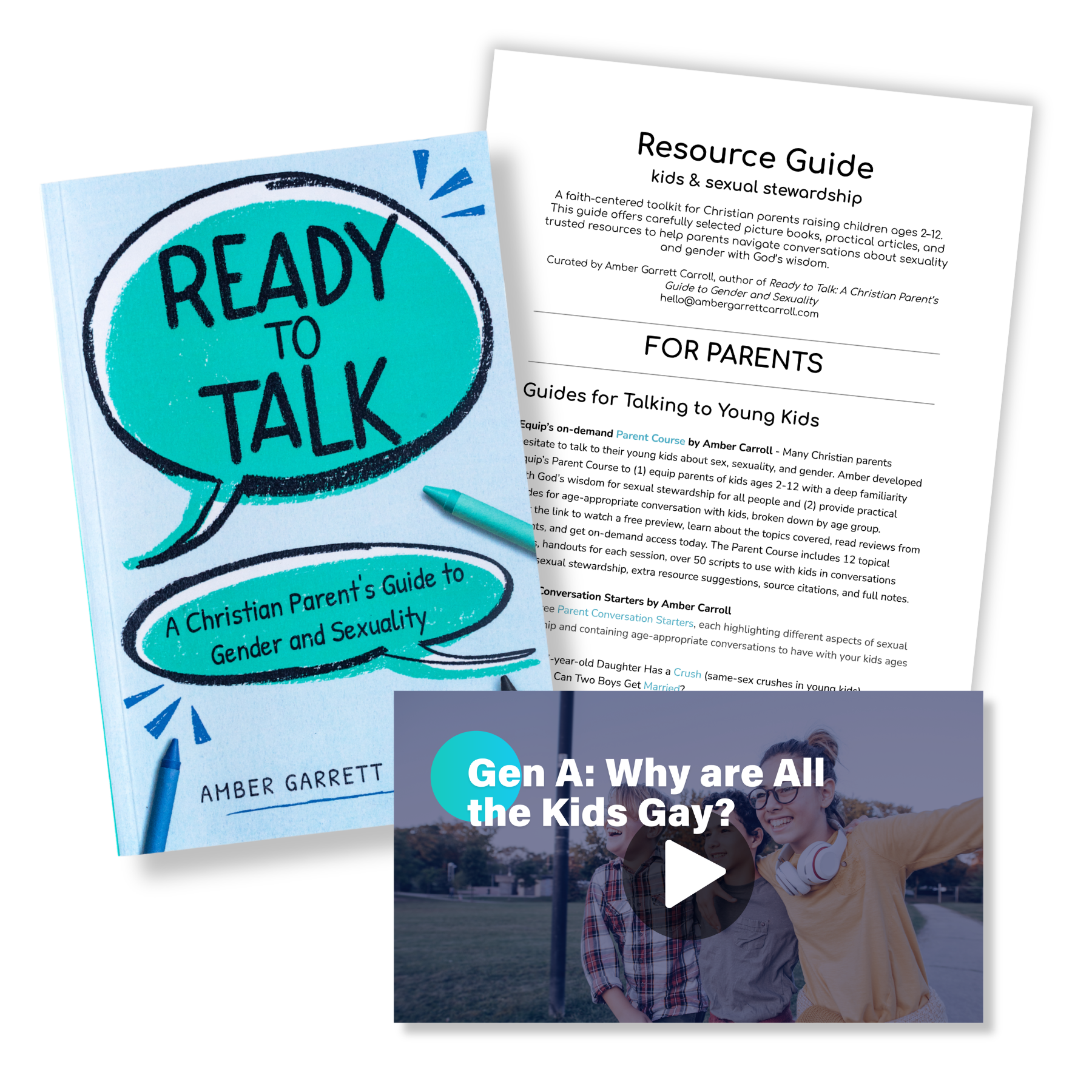
Why are so many of Gen A identifying as LGBT+?
First, let’s talk about who Gen A is.
They’re the kids born between 2010 and 2025, making the oldest of the Alpha generation just 15.
They are the first generation to be born entirely in the 21st century, and they are expected to be the most globally and racially diverse generation in history. Their lives have been profoundly shaped by portable digital technology, ever-present social media, streaming services, the Covid-19 pandemic, Trump-era politics, social justice movements, and the progression of AI. Most live in homes with multiple smart devices, and virtually all have attended school online at some point. They have strong values around social justice, are more cautious about social media than previous generations, and desire to impart social change themselves. They often consume entertainment in short bursts via YouTube or TikTok videos, opting to observe and watch rather than post their opinions or share about causes they care about. But how many of them are gay?
While there are no definitive numbers for Gen A’s LGBT+ identification yet, we can look at previous generations to give us an idea.
In 2023, 2.3% of Boomers identified as LGBT+. Gen X = 4.5%. Millennials 9.8% and Gen Z 23.2%.And these are conservative estimates. Some studies show that over 10% of Millennials and over 30% of Gen Z identify as LGBT+. It would not be unthinkable to expect 30% or more of Gen A to identify as gay, and that’s a pretty conservative guess.
Probably 30+% of Gen A do not experience robust feelings of SSA, no SAs, or a strong sense they were born the wrong bio sex. So why are so many adopting an LGBT+ label?
Several dynamics are at play in this shift.
1. An increasing number of people, particularly females, are recognizing their capacity for sexual fluidity. “I guess I could be with a girl. It doesn’t gross me out,” leads to bi or pan identification. Twenty-five years ago, a female who was attracted to both males and females during adolescence but only attracted to males as an adult might not have taken on the label of bisexual. Today, she probably would.
2. What people are willing to call bisexual (the largest category of queer for Gen Z) or pansexual (Gen Alpha has pretty much rejected the term bisexual in favor of pansexual) is much broader today than it was even 25 years ago.
3. What it means to be or identify as LGBT+ has shifted a lot in the past 25+ years. There are more ways to be queer, meaning there is more space under the queer umbrella. Instead of being content with just a few LGBT+ labels and being content to identify as cisgender or straight if those labels don’t fit, young people are redefining or creating categories to fit their experiences.
4. More are identifying as transgender or under the queer umbrella as a rejection of cultural gender norms and roles, even as some experience zero gender incongruence.
5. Identifying under the queer umbrella means experiencing belonging in a cultural movement, making identification far more appealing for Gen A than it was for Millennials or even Gen Z.
How has culture shaped our kids’ views of sexuality and gender?
*Note: Not all of these are inherently negative. I’m merely pointing out “the way things are.”
The world is more connected than ever, and our kids have access to more information and entertainment than any previous generation. They’re exposed to more ideas, viewpoints, beliefs, and value systems than we ever were. With just a few clicks, they can be reading posts on how to attract a romantic partner, watching videos about gender transition, or listening to debates about gay marriage. That isn’t inherently bad; exposure to diverse stories can build empathy. But it does mean our kids are shaped by LGBT+ stories in ways we weren’t.
We live in an incredibly individualistic culture. “You do you.” “Be your true self.” The pull toward total freedom from anything that might limit self-expression or self-identity is strong. We call this authenticity.
We also live in a deeply romance-centric culture. Finding “the one” is framed as the key to becoming our true selves. “Soulmate” language saturates songs, movies, shows, and social media. So much of what our kids take in is centered on romance or on discovering and displaying their authentic selves.
Add to that the fact that gay marriage and gender transition are legal and widely promoted means media narratives often portray anyone with conservative views on marriage or medical transition as bigoted or backward. To many kids, non-affirmation looks like a denial of their right to express who they are and pursue the fulfillment romance promises.
The Church, in many ways, has echoed this same individualistic, romance-first mindset. Marriage and family life often revolve around the nuclear family’s needs and schedules, not the broader Christian community. Kids see this. They notice how culture—and Christians—revere romance and self-centered autonomy. So why wouldn’t they assume the same when it comes to same-sex attraction or gender? Why should they sacrifice the romance or expression they want when no one else seems to be asked to?
As representation grows, kids have more role models whose journeys are similar their own. They gravitate toward the people they admire, and they emulate them.
Plus, new ways of being out and new expressions of queerness are constantly emerging. Things that wouldn’t have been considered queer in the past, like a lack of sexual attraction or gender-neutral clothing, are now included under that umbrella.
And of course, it’s cool to be queer. Gen Alpha is watching Gen Z experiment with identity labels, trying them on, swapping them out, saying sexuality and gender are fluid and temporary for many. Permanence feels optional. Kids want to fit in, stand out, and belong all at once. Claiming an LGBT+ label, even loosely, can do that.
While God calls us to teach our kids His wisdom, culture is teaching its own competing wisdom. And our kids absorb it. (We do, too.)
How can we, as Christian parents, respond in ways that protect our relationship with our kids and open the door for deeper conversations about God’s wisdom?
Some Christian parents want to respond by retreating further from mainstream culture, hoping to protect their children and hoping to increase the chances that their child will identify as straight and cisgender.
I get it. We don’t want our kids to experience the hardship we’ve seen countless LGBT+ people endure in Christian spaces. We’re afraid that LGBT+ identification means gay romance and eventually gay sex are inevitable, and it’s hard for us to imagine a worse or more embarrassing sin. We’ve bought into the idea that kids can’t help but follow the cultural script associate with orientation: Gay people will pursue gay romance and gay sex; straight people will pursue straight romance and straight sex. And only one of those is acceptable in our churches. So when a child comes out with a label, we try to convince them they’re not gay.
But if a majority of kids in Gen A do adopt a label, trying to convince them they’re not queer is not going to work. Even so, we are not without hope. Some Christian parents respond to a child’s LGBT+ label with doubt and accusations of faking it, but doubt leads to a loss of relationship and loss of influence. I have a better solution than just telling your child they’re faking it. Instead of resisting queer identification, we can guide it.
What if instead of running away or trying to convince our kids they’re straight or accusing them of faking, we accepted the call to disciple what could quickly become the Queer Generation?
What if parents responded not with surprise, horror, disgust, or blame, but instead responded, “You’re queer? Ok. God is not surprised, and His wisdom is still clear and very good for you.”
Hesitate to doubt and be curious; deepen your rapport with your kids around sexuality, gender, God’s wisdom, then trust the Holy Spirit
What does it look like to model and teach faithfulness to God’s wisdom in our sexuality and gender?
From an early age, we should be teaching our kids about God’s good wisdom for all of sexual stewardship (wisely managing our need and capacity for connection in community, for intimacy in family), including how we steward our friendships, bodies, intimacy needs, and more. Kids who experience same-sex attraction or gender incongruence don’t need connection in community any less than kids who don’t experience those things.
We must help our kids recognize brokenness, both outside (affairs, abortion, widowing, infertility, divorce) and inside themselves (same-sex attraction, gender incongruence, temptation toward lust). We’ll also have to help them cope with the consequences of sin, either their own or another’s.
Invite your kids, before puberty hits, to share with you whenever they discover themselves wrestling with their internal feelings, their body, or their sexuality in any way. You can reassure them that their attractions, their feelings of gender incongruence, or their temptations are not their fault. You can promise to support them.
Interrupt the idea that one’s identify must follow a certain cultural script. Experiencing same-sex attraction does not mean one must pursue gay romance and gay sex. Experiencing gender incongruence does not mean that one must pursue gender transition. Experiencing opposite-sex attraction does not mean one must pursue straight romance and straight sex.
We can offer Gen A a better script to follow, one built on God’s design for meeting intimacy need and finding family. Throughout childhood, offer your kids ways to make sense of their sexuality, their need for connection, and their body. In age-appropriate ways, explain the way God made us to enjoy intimacy in a family and how we are to find that family.
You can also reassure them that if they feel an LGBT+ label best describes their experience of attractions of internal feelings of gender, God isn’t surprised or disappointed in them. God already knew all the brokenness people would experience, including theirs. That’s why He gave us His Word and His Body, the Church, to teach us how to steward our bodies and our need for connection with others. He knew some people would be queer, and His wisdom for them is the same. We can truthfully tell our kids, “Regardless of how you feel in your body or who you’re attracted to, following God’s wisdom will lead to the greatest joy, deepest satisfaction, and richest belonging.”
Empower your kids to embrace God’s wisdom and thrive as they follow it, no matter what label they adopt.
To access the full webinar recording, including a handout, visit equipyourcommunity.org/premium.
This post contains an abridged version of the webinar content.